_edited_edited_p.png)
_edited.png)

Manpower Outsourcing: Contractual Workers, Permanent Impact — The Untold Side of India’s Growth Story

India’s economic rise is often credited to startups, technology, and manufacturing, but there’s another silent engine driving this growth,the contractual workforce. From logistics hubs to IT parks, manpower outsourcing has become the invisible gear turning India’s development wheel.
While these workers are called temporary, their impact is anything but. Let’s explore the role of contract workforce in India’s economic development, and how it’s shaping the nation’s labor dynamics.
Outsourcing in India — The Growing Engine
India’s HR outsourcing market is expanding rapidly as companies look for agility and cost efficiency. According to industry estimates, the market stood at USD 8.6 billion in 2024 and is projected to reach USD 13.9 billion by 2033.
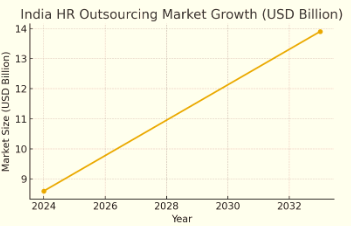
📊 India’s HR Outsourcing Market Growth
This steady rise shows that organizations are embracing outsourcing in India not only to optimize operations but also to focus on core business functions leaving workforce management to experts.
(IMARC Group – “India Human Resource (HR) Outsourcing Market Report 2024–2033)
Changing Workforce Dynamics
Despite India’s economic growth, the labor impact tells a more complex story. The proportion of casual and contractual workers has declined slightly from 24.9% in FY2017–18 to 19.8% in FY2023–24 hinting at gradual formalization but also highlighting the persistent gap in job security and benefits.

📉 Share of Casual/Contractual Workers
The workforce dynamics reflect both opportunity and vulnerability while outsourcing creates jobs, many remain outside the social security net.
(Economic Times)
The Dual Edge of Contractual Workforce
Positive Impact
Provides flexibility to industries with fluctuating demands.
Encourages economic growth by reducing fixed labor costs.
Opens opportunities for millions in logistics, manufacturing, and retail.
Challenges
Limited access to provident fund, healthcare, or career progression.
Risk of exploitation in unregulated sectors.
Lack of clear pathways for temporary workers to become permanent.
A Smarter Way Forward
To make the contractual workforce a true pillar of India’s progress, reforms must focus on:
Portable social security for gig and contract workers.
Upskilling programs that help transition into permanent roles.
Policy clarity and GST rationalization to promote formal employment.
When fair labor practices meet business flexibility, outsourcing in India can evolve from a cost-saving model to a sustainable growth driver.
Conclusion
Manpower outsourcing isn’t just a corporate convenience, it’s a vital part of India’s growth story. As companies and policymakers recognize the labor impact of these workers, the focus must shift from temporary roles to permanent progress.
Because behind every milestone in India’s economic rise, there’s a contractual worker ensuring the engine never stops.


Comments